Red Light Therapy for Knee Pain: A Practical Buyer's Guide
Considering red light therapy for knee comfort and relaxation? This guide explains what it is, how at-home devices work, and what to look for when shopping.
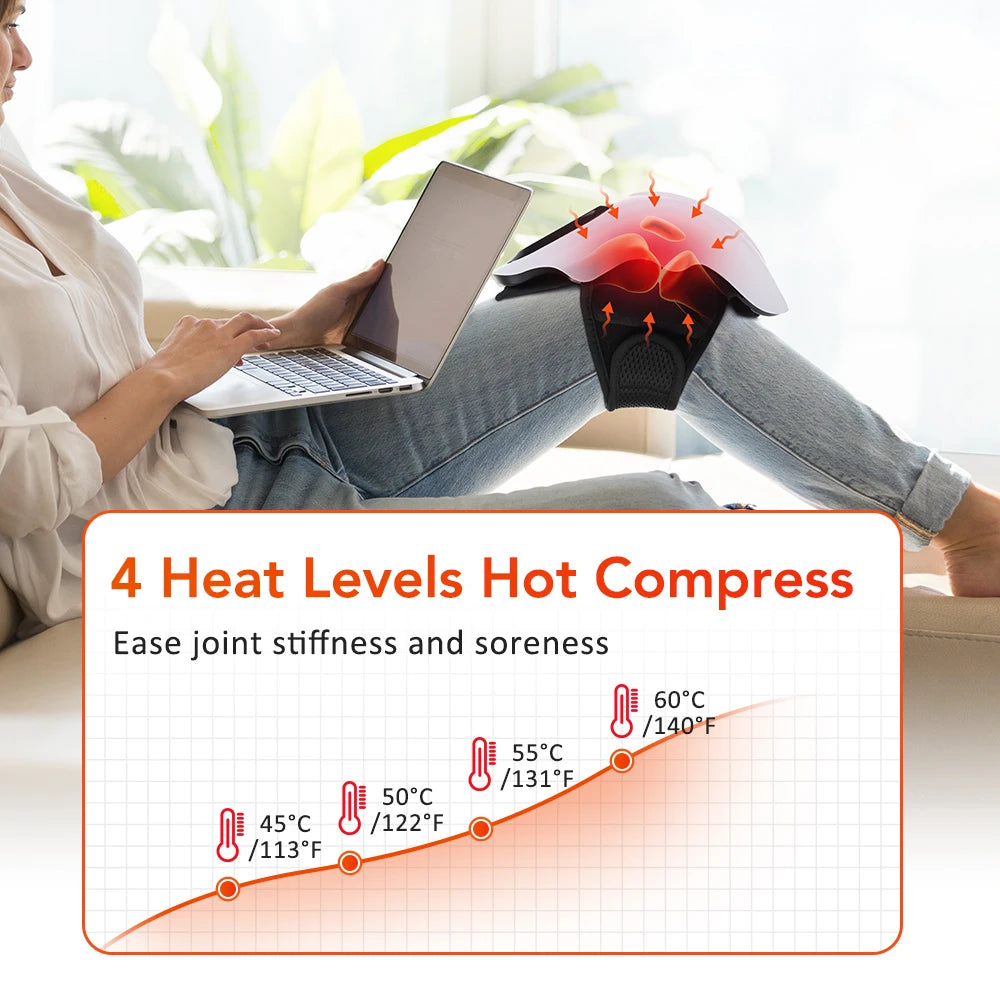
What People Mean by "Red Light Therapy for Knee Pain"
When people search for "red light therapy for knee pain," they're typically looking for at-home wellness devices — not clinical treatments. These are wearable wraps or pads that combine red and infrared light with other comfort features like heat and vibration.
Important clarification: Red light knee devices sold for home use are wellness and comfort products, not medical devices. They're not intended to diagnose, treat, cure, or prevent any disease. If you have diagnosed knee problems, injury, or persistent pain, always consult your healthcare provider first.
That said, many people use red light therapy as part of their self-care routine for relaxation and comfort after long days on their feet, post-workout recovery, or general evening wind-down. Think of it like using a heating pad or taking a warm bath — a soothing ritual that helps you relax.
Red Light vs Near-Infrared: Understanding the Wavelengths in Plain English
Red light therapy devices use specific wavelengths of light measured in nanometers (nm). You'll typically see two types mentioned:
Red Light (630-660nm)
This is the visible red glow you can see. Red light at these wavelengths can penetrate the skin's surface layers.
What it looks like: Bright red LEDs that you can see clearly when the device is on.
Near-Infrared (810-850nm)
This wavelength is invisible to the human eye but can penetrate deeper into tissue than visible red light.
What it looks like: You might see a very faint glow or nothing at all, but the LEDs are still working.
Why both matter for knees: Quality devices combine both wavelengths. Red light works at surface and mid-depth levels, while near-infrared penetrates deeper. Together, they provide more comprehensive coverage than either wavelength alone.
When shopping, look for devices that clearly state their wavelengths (ideally dual 660nm + 850nm or similar combinations) and have enough LEDs (at least 16) to cover your entire knee.
Heat + Vibration + Light: Why Combo Devices Are Popular for Knees
While you can buy standalone red light panels or basic heating pads, most people shopping for knee-specific devices end up choosing combo units that offer:
- Red light therapy — for deeper light wavelength penetration
- Adjustable heat — for immediate surface-level warmth and comfort
- Gentle vibration — for added relaxation and massage-like sensation
Why this combination works: Each modality contributes something different. Heat feels soothing right away. Red light penetrates deeper over the course of the session. Vibration adds a gentle massage element. Together, they create a more complete relaxation experience than any single approach alone.
💡 Real-World Use Case
After a long day of retail work, you sit on the couch, wrap the device around your knee, and turn on all three modes: low heat for immediate warmth, vibration for gentle relaxation, and red light working deeper throughout the 15-minute session. It's become your nightly wind-down ritual.
When comparing devices, check that you can independently control each feature. You should be able to adjust heat levels, vibration intensity, and turn red light on/off separately.
Cordless Wrap vs Pad vs Clinic-Style Panels: Home-Use Tradeoffs
Red light therapy for knees comes in several formats. Here's how they compare for at-home use:
Cordless Knee Wraps
Best for: Convenience, portability, all-in-one design
Pros: Use anywhere (couch, bed, desk), combines heat + light + vibration, adjustable strap fits most knees, no outlet needed
Cons: Needs charging every 5-8 sessions, limited to joints that fit the strap
Typical price: $80-$120
Corded Knee Pads
Best for: Unlimited session length, no battery concerns
Pros: No charging needed, often less expensive
Cons: Tethered to outlet, cord can be inconvenient, less portable
Typical price: $60-$100
Clinic-Style Red Light Panels
Best for: Full-body use, higher LED count, multiple body areas
Pros: Very powerful, can treat multiple areas, stand or hang on wall
Cons: Expensive ($200-$600+), requires dedicated space, less targeted for knees specifically, no heat or vibration included
Typical price: $200-$600+
Our take for knees specifically: Cordless wraps offer the best balance of convenience, targeted coverage, and multi-modal therapy (heat + light + vibration). Panels are great if you want full-body red light therapy for other reasons, but they're overkill if you're focused on knee comfort.
How to Evaluate a Knee Device: Buyer's Checklist
When comparing devices, use this checklist to ensure you're getting a quality product:
Essential Features
- LED Count: At least 16 red/infrared LEDs for adequate knee coverage
- Wavelengths: Dual wavelength (red 630-660nm + near-infrared 810-850nm) clearly specified
- Battery: 2000mAh or higher for 5-8 sessions per charge (cordless models)
- Heat Levels: 4+ adjustable temperature settings (approx 113°F to 140°F)
- Vibration: 3-4 intensity levels, independently adjustable
- Auto Shut-Off: 10-15 minute timer for safety
- Adjustable Strap: Fits knee circumference (typically 12-20 inches)
- Material: Soft, breathable fabric that doesn't irritate skin
- Return Policy: At least 30 days to test it at home
⚠️ Red Flags to Avoid
- No wavelength specifications listed (or vague "therapeutic wavelengths")
- Fewer than 12 LEDs (insufficient coverage)
- Medical claims ("treats arthritis," "heals injuries," "cures pain")
- No return policy or very short return window
- Battery under 1500mAh (will need frequent charging)
Building a Simple At-Home Routine
Once you have your device, consistency matters more than duration. Here's a practical routine most people can stick to:
Pick a Consistent Time
Evening wind-down (8-9pm) works for most people. After dinner, before bed. Pair it with another relaxing activity: reading, TV, or just quiet time.
Start Conservative
First few sessions: lowest heat, gentle vibration, all LEDs on. Let your body adjust. Increase settings gradually over the first week based on comfort.
Use the Full Timer
10-15 minutes per session (most devices auto-shut-off). That's enough for relaxation without overdoing it. Daily or 4-5 times per week is fine.
Track How You Feel
Not scientifically, just informally. Do you find it relaxing? Does it help you wind down? Adjust your routine based on what feels good, not what you think you "should" do.
Sample Week
Monday: 15 min after work, low heat, medium vibration
Tuesday: Skip (late night, forgot to charge)
Wednesday: 10 min before bed, medium heat, light vibration
Thursday: 15 min post-workout, low heat, no vibration
Friday: 15 min evening, medium heat, medium vibration
Weekend: One session Saturday, skip Sunday
Notice: not every day, not perfect timing, settings vary. This is real-world use, not a rigid protocol. Consistency over perfection.
Safety, Who Should Talk to a Clinician First, and Honest Expectations
⚠️ Important Safety Information
Red light knee devices are wellness products, not medical devices. They are not intended to diagnose, treat, cure, or prevent any disease or medical condition.
Always consult your healthcare provider before use if you:
- Have any diagnosed knee condition (arthritis, tendonitis, meniscus injury, ligament damage, etc.)
- Experience persistent or severe knee pain
- Are pregnant or may be pregnant
- Have a pacemaker, defibrillator, or other electronic implant
- Have metal implants in or near the knee
- Have diabetes, neuropathy, or reduced skin sensation
- Have blood clots (DVT), varicose veins, or bleeding disorders
- Have active infection, inflammation, or broken skin on the knee
- Take photosensitizing medications
- Have epilepsy or sensitivity to flashing lights
Setting Realistic Expectations
Red light therapy is popular in wellness circles, but let's be honest about what to expect:
- It's not a cure. If you have a medical condition, red light won't fix it. See a doctor.
- Results vary widely. Some people love their sessions and make it part of their routine; others don't notice much. Individual experiences differ.
- It takes consistency. If you use it twice and give up, you won't know if it works for you. Most people who benefit use it regularly for weeks.
- The relaxation ritual matters. Carving out 15 minutes to sit quietly, unplug, and focus on comfort has value regardless of the device.
- Combination therapy helps. Heat + light + vibration together may feel better than any single modality alone.
Bottom line: Think of red light therapy as one tool in your self-care toolbox. It's not magic, but for many people, it's a pleasant, relaxing ritual that complements other healthy habits.
Frequently Asked Questions
Does red light therapy really work for knee comfort?
Red light therapy has been studied for various wellness applications. While individual experiences vary, many people find red light sessions relaxing and incorporate them into their comfort routines. It's a non-invasive approach that uses specific light wavelengths. For knee-specific concerns, consult your healthcare provider.
What wavelengths should I look for?
Quality devices typically use red light (630-660nm) and near-infrared (810-850nm) wavelengths. These specific wavelengths can penetrate deeper than visible light. Look for devices that clearly specify their LED wavelengths and have at least 16 LEDs for adequate knee coverage.
How long should each session be?
Most at-home devices have automatic timers set to 10-15 minutes, which is ideal for most users. This duration provides sufficient light exposure without overdoing it. Many people use their device daily or several times per week as part of their evening wind-down routine.
Can I use red light therapy if I have knee problems?
Red light knee devices are wellness products, not medical devices. If you have any diagnosed knee condition, injury, or ongoing knee pain, consult your doctor before use. They can advise whether red light therapy is appropriate for your specific situation.
Is it safe to use with heat and vibration at the same time?
Yes, most combination devices are designed to use all three modalities together safely. Start with low settings and adjust based on comfort. The red light itself doesn't produce heat — it works through light wavelengths — while the heating element provides warmth separately.
Ready to Shop for a Red Light Knee Device?
If you're looking for a cordless, all-in-one device that combines red light therapy with heat and vibration, focus on these priorities: clear wavelength specs (660nm + 850nm), at least 16 LEDs, good battery life (2000mAh+), multiple heat and vibration levels, and a solid return policy so you can try it risk-free at home.
Try Our Cordless Red Light Knee Massager
16 red/infrared LEDs (660nm + 850nm), 4 heat levels, 4 vibration settings, 2000mAh battery. Ships free with 30-day returns. $89.99.